Haute-mechanics file · RM 052
The skull is structural in the genuine calibre, not a printed motif. A useful QC review maps bridges, tourbillon, hands and case attachment before discussing finish.
This Richard Mille RM 052 superclone tourbillon guide begins with the genuine watch’s defining engineering decision. Richard Mille states that the RM 052 uses a manually wound tourbillon calibre whose grade 5 titanium baseplate and bridges form the skull. The upper and lower jaws hold the tourbillon-cage ruby, and four bridge structures connect the movement to the case.
A store configuration may reproduce the visual architecture with a different movement and materials. The listing should state the installed mechanism and functional tourbillon claim precisely. Photographs can show layout and operation; they cannot prove titanium grade, genuine construction or long-term serviceability.
Richard Mille RM 052 superclone tourbillon guide: map the skull structure
Do not treat the skull as a single decorative layer. Examine forehead, eye openings, jaw structures, center bridge, tourbillon position and four case-connection bridges. The genuine design integrates these elements into the movement. A product should be photographed straight on so symmetry and hand alignment can be checked without perspective distortion.
Follow with oblique images that reveal depth between hands, skull, cage and background components. Look for loose particles, coating inconsistency and contact points. A dark background or extreme sharpening can hide edges; neutral diffuse light and original-resolution files are more useful.
Manual winding, tourbillon operation and movement wording
Richard Mille describes the genuine RM 052 as a manual-winding tourbillon showing hours and minutes. The store should identify whether the offered cage is a functional tourbillon, an open-heart display or another mechanism. A rotating assembly in video is not sufficient terminology; the written product record should match what is installed.
Request one continuous video showing the stopped or low-wind state if available, controlled winding, the running cage, hand setting and return of the crown. Do not over-wind or repeatedly operate the mechanism for demonstration. Rate and reserve claims need dated testing tied to the unit.
| Checkpoint | Genuine reference baseline | Evidence for the selected unit |
|---|---|---|
| Architecture | Genuine skull forms titanium baseplate/bridges | Visible layout and product material statement |
| Movement | Genuine RM052 is manual-winding tourbillon | Installed mechanism identified precisely |
| Tourbillon | Genuine cage integrated at the jaw/ruby position | Continuous operation video and service path |
| Case | Reference-specific tonneau and four-bridge integration | Multi-angle unit images and measurements if supplied |
| Performance | Official genuine engineering is not product certification | Unit-specific rate, reserve and pressure evidence |
Hand clearance and cage visibility
Move the hands through a complete twelve-hour cycle during inspection when practical, observing clearance over the skull and cage. The hands should remain parallel, avoid applied structures and align correctly at the hour. A macro still at several positions can reveal tilt that a short video misses.
The cage should run without visible contact or severe wobble. Video frame rate can create strobing or apparent reversal, so judge physical behavior from multiple moments rather than one frame. Sound captured by a phone is affected by surface vibration and compression.
- Level front image of complete skull architecture
- Oblique images showing layer depth
- Continuous winding and cage-operation video
- Hands checked through a complete cycle
- Front/back case alignment and screws inspected
- Tourbillon service or replacement path confirmed
Tonneau case, screws and crystal relationship
Photograph the case from front, back, both sides, top and underside. Inspect curvature, bezel/back alignment, screw seating, crown projection and the gap around the crystal. The movement should appear centered inside the case from straight views. Protective film must be identified before surface marks are evaluated.
Any titanium or coating description belongs to the store configuration and supporting record. Weight must specify the fitted strap and buckle. A visual comparison cannot verify alloy grade, pressure resistance or the internal structure of a closed component.
Tourbillon serviceability and ownership record
A tourbillon-style configuration requires a clearer service plan than a simple automatic movement. Ask who can diagnose it, whether the cage is serviced or the complete movement replaced, what parts are available and how the warranty process handles shipping. Record the answer before approval.
Avoid shock, strong magnetic sources and crown operation while the watch is under unusual load. If the cage stops, hands contact, winding changes sharply or debris appears, stop using the watch and contact support. Do not open the case without understanding the warranty and sealing consequences.
Capture a tourbillon video that can be reviewed
Stabilize the camera, use neutral continuous light and keep the cage in focus for a meaningful interval. Include the complete watch at the beginning so the video remains tied to the unit, then move to the macro view. Avoid edited clips that remove the transition between winding, running and setting.
Record at normal speed. High-frame-rate or slow-motion footage can supplement the main clip but should not replace it because playback processing changes apparent motion. If a sound is questioned, repeat the clip on a non-resonant surface and state the recording conditions.
Transport and post-delivery inspection
A complex openworked watch should be secured so the head cannot strike the buckle or shipping container. Photograph packing and included accessories before dispatch. On arrival, compare the cage, hands, crown, crystal and case screws with the approved QC before extended operation.
If the package experienced a visible impact, document it and observe the movement without forcing the crown. Report a stopped cage, shifted hand or loose component immediately. Retain the unboxing evidence until the functional inspection is complete and the store confirms the next step.
Use still frames from the original tourbillon video to review a moving mechanism. Capture the same front angle at several cage positions and add an oblique view showing the vertical relationship between cage, skull structure and hands. The record can demonstrate visible cage motion, hand clearance and condition at that time; it does not establish rate accuracy, shock resistance, material composition or long-term serviceability. Those require separate records and a clear support path for the installed mechanism. Avoid filters, frame interpolation and edits that hide continuity.
Build the final approval record
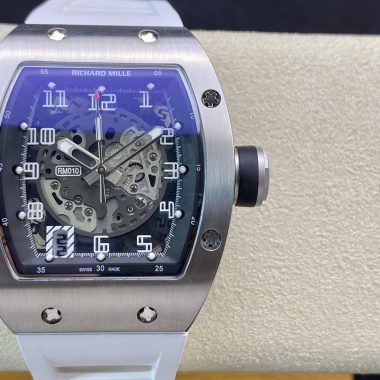
Use the RM 052 Tourbillon Skull configuration as the sellable-product record and compare it with the RM 010 engineering guide to distinguish manual tourbillon evidence from automatic rotor evidence.
Keep the exact tourbillon wording, movement statement, configuration/version, QC video and service answer together. Any material or performance result should identify the individual unit.
Reference sources: Richard Mille’s official historical RM 052 Tourbillon Skull reference page.
Buyer questions