Design architecture · Hublot Big Bang
The Big Bang is a layered construction. Case components, bezel, screws, dial depth, controls and strap integration should be reviewed as one assembly.
Hublot Big Bang superclone searches need reference control
“Hublot superclone,” “Hublot Big Bang super clone” and similar searches combine many case sizes, materials, dial layouts and movement configurations. The Big Bang, Spirit of Big Bang and Classic Fusion are not interchangeable comparison targets. Resolve the model family, reference-style design, material and complication before comparing factory or version claims.
This prevents a common error: treating every visible screw, pusher or skeleton element as if it belongs to one universal Hublot layout. The correct baseline is the named reference; the sellable evidence is the exact store configuration.
Read the case as a stack of components
Request front, side and three-quarter photographs taken from consistent distance. Very close phone images can distort the tonneau or round case geometry. Look for even component gaps, clean finish transitions and colour consistency across composite or coated parts.
Bezel screws, dial depth and chronograph layout
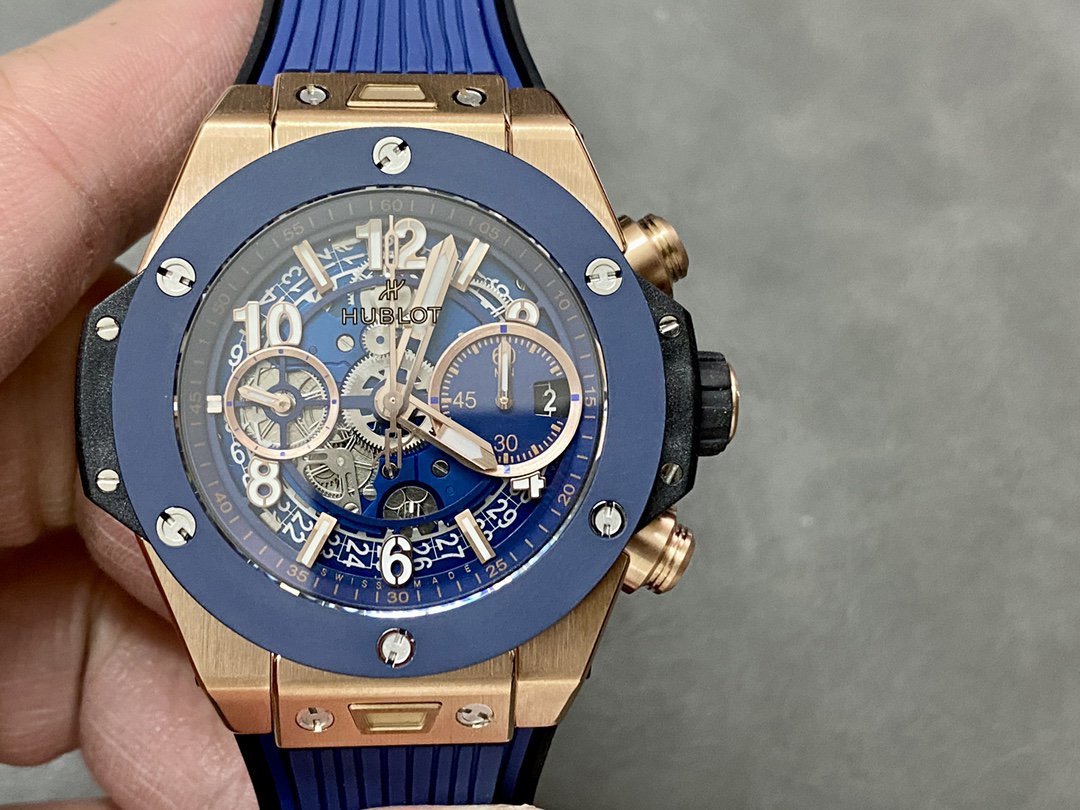
Bezel screws should be assessed for machining, seating and finish. Reflections can make one screw appear darker or higher, so a second angle is useful before deciding that a defect exists. On openworked or layered dials, check hand clearance, index position, date alignment and subdial depth rather than relying on one front image.
For chronograph configurations, identify the intended subdial roles and request a start-stop-reset sequence. Final reset position is visible evidence; movement origin, power reserve and long-term reliability require separate documentation or observation.
Materials and movement wording
| Product statement | What images can show | What the record should state |
|---|---|---|
| Ceramic / carbon-style case | Surface, weave or colour, visible chips and finish | Material description for the exact SKU |
| Sapphire crystal | Shape, edge, reflections and visible condition | Declared material; coating where specified |
| Automatic chronograph | Visible running and chronograph operation | Installed movement description and service route |
| Water resistance | Not proven visually | Dated pressure result tied to the unit |
Strap, inserts and clasp integration
Hublot-style straps often form part of the case architecture. Inspect fit at both lugs, screw or attachment treatment, strap curvature, keepers and clasp alignment. A broad case can rotate if the strap length or clasp position is wrong, so record wrist size and the delivered strap package.
Where pushers or crown inserts use contrasting materials, inspect their alignment and surface condition from both sides. Keep spare strap, buckle or tool details in the same order record.
Create a complete approval sequence
- Confirm Big Bang, Spirit of Big Bang or Classic Fusion
- Record the stated case and component materials
- Inspect bezel, screws and layered case alignment
- Test crown, date and chronograph where fitted
- Check strap fit, clasp and supplied components
- Retain unit measurements and tests separately
Use the Hublot Big Bang Unico Blue configuration as a practical example: its blue case elements, layered dial, controls and strap should agree as one configuration before QC approval.
Questions from search